
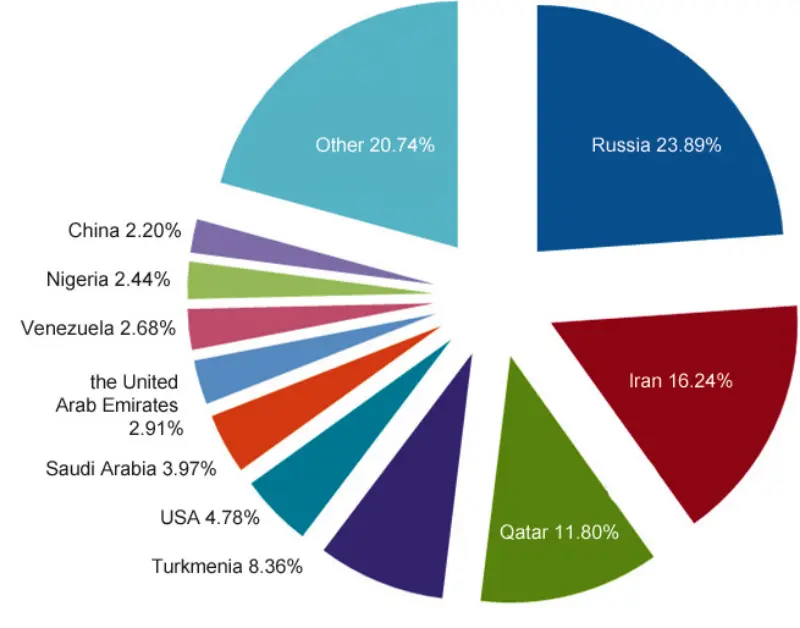
Natural gas stands as one of the world’s most critical energy resources, powering electricity generation, heating, industry, and transportation while serving as a bridge fuel in the global transition toward lower-carbon systems. Countries possessing the largest gas reserve holdings exert considerable influence over international energy markets, supply security, and geopolitical dynamics due to their ability to meet rising demand from growing economies in Asia and elsewhere. Russia holds the largest gas reserve among all nations, followed closely by other major players in Eurasia and the Middle East that together control a substantial share of global proven deposits. These reserves represent not only immediate economic assets through production and exports but also long-term strategic advantages in an era of fluctuating prices and shifting alliances. Understanding the distribution and scale of these holdings provides essential context for energy policy, investment decisions, and forecasts of future supply stability worldwide.
1. Russia
Russia commands the top position among countries with the most natural gas reserves, boasting 47,798 billion cubic meters that establish it as the holder of the largest gas reserve on the planet. Vast Siberian fields such as those in the Yamal Peninsula and the massive Urengoy deposit underpin this dominance, supported by extensive pipeline infrastructure connecting to Europe and Asia. The nation plays a pivotal role in global supply through major exports that influence pricing and energy security across multiple continents. Despite external pressures from sanctions, ongoing development of new fields and LNG projects positions Russia to maintain its premier status in natural gas resources for decades ahead.
2. Iran
Iran secures the second spot in countries with the most natural gas reserves with 33,980 billion cubic meters, forming one of the largest gas reserve concentrations in the Middle East. The giant South Pars field, shared with Qatar, represents a cornerstone of its holdings and drives significant domestic production alongside export ambitions. Abundant reserves support the country’s energy independence and potential for expanded LNG and pipeline deliveries to neighboring regions. Geopolitical factors and infrastructure investments continue to shape how Iran leverages this superior resource base in international markets.
3. Qatar
Qatar ranks third among countries with the most natural gas reserves, holding 23,871 billion cubic meters centered on the enormous North Field. This premier offshore deposit enables Qatar to rank as a top global LNG exporter, supplying clean-burning fuel to Asia and Europe through advanced liquefaction facilities. The nation’s strategic location and technological expertise in gas processing amplify the value of these reserves far beyond raw volumes. Continued expansion of production capacity reinforces Qatar’s leading role in the worldwide natural gas trade.
4. Saudi Arabia
Saudi Arabia occupies the fourth position in countries with the most natural gas reserves at 15,910 billion cubic meters, complementing its dominant oil sector. Associated gas from major oil fields provides a reliable domestic supply while growing non-associated reserves support future export growth through planned LNG projects. The kingdom’s vast resources offer excellent potential for diversification away from crude oil dependence. Investments in gas infrastructure position Saudi Arabia as an emerging top-tier player in international gas markets.
5. United States
The United States holds the fifth rank among countries with the most natural gas reserves with 13,167 billion cubic meters, largely from shale formations like the Marcellus and Permian basins. Technological advances in horizontal drilling and hydraulic fracturing unlocked these resources, transforming the nation into a net exporter of LNG. Abundant domestic supply enhances energy security and supports industrial growth across multiple sectors. Ongoing innovation in extraction methods ensures the US maintains a competitive edge in global natural gas dynamics.
6. Turkmenistan
Turkmenistan features prominently in countries with the most natural gas reserves at 11,326 billion cubic meters, with the massive Galkynysh field serving as a key asset. Central Asian location facilitates pipeline exports primarily toward China and potential routes to Europe or South Asia. These reserves form the backbone of the national economy and provide substantial revenue through long-term supply agreements. Development of additional fields and infrastructure continues to elevate Turkmenistan’s status as a reliable regional supplier.
7. China
China ranks seventh in countries with the most natural gas reserves with 6,654 billion cubic meters, drawing from both conventional onshore fields and growing shale resources. Rapid economic expansion drives strong domestic demand that these reserves help meet alongside increasing imports. Government focus on cleaner energy sources positions natural gas as a vital component of the national mix. Exploration efforts and technological improvements aim to boost output from existing deposits.
8. United Arab Emirates
The United Arab Emirates holds the eighth position among countries with the most natural gas reserves at 6,088 billion cubic meters, concentrated in offshore and onshore fields within Abu Dhabi. These resources support both domestic power generation and growing LNG export capabilities through facilities like those on Das Island. Diversification strategies leverage gas alongside oil to build a resilient energy economy. Strategic investments enhance the UAE’s role as a stable supplier in global markets.
9. Nigeria
Nigeria secures ninth place in countries with the most natural gas reserves with 5,748 billion cubic meters, much of it associated with major oil operations in the Niger Delta. Significant flaring reduction efforts and new gas infrastructure projects unlock greater value from these deposits. The reserves offer excellent potential for domestic industrialization and expanded exports via LNG terminals. Ongoing developments position Nigeria as an increasingly important African contributor to international gas supply.
10. Venezuela
Venezuela occupies the tenth spot among countries with the most natural gas reserves at 5,663 billion cubic meters, primarily associated with its vast oil fields. Political and economic challenges have limited full development of this resource base despite its scale. Potential for future recovery through improved governance and investment could elevate its global standing. These reserves represent a substantial asset for long-term energy planning in Latin America.
11. Algeria
Algeria ranks eleventh in countries with the most natural gas reserves with 4,502 billion cubic meters, anchored by major fields in the Sahara Desert. Long-established pipeline connections to Europe make it a key supplier for Mediterranean markets. The reserves support both domestic needs and export revenues critical to the national budget. Modernization of facilities and new exploration sustain Algeria’s competitive position in regional gas trade.
12. Iraq
Iraq holds the twelfth position among countries with the most natural gas reserves at 3,738 billion cubic meters, with significant associated gas from its prolific oil fields. Development of gas processing plants aims to reduce flaring and capture more value from these resources. Growing production capacity supports domestic power generation and potential future exports. Strategic focus on gas infrastructure enhances Iraq’s emerging role in Middle Eastern energy dynamics.
13. Australia
Australia features thirteenth in countries with the most natural gas reserves at 3,228 billion cubic meters, driven by major offshore fields in the northwest and coal seam gas in Queensland. World-class LNG export terminals position the country as a premier supplier to Asian markets. Abundant reserves provide long-term energy security and economic benefits through trade. Continued project development reinforces Australia’s status as a top-tier global gas exporter.
14. Mozambique
Mozambique occupies the fourteenth spot among countries with the most natural gas reserves with 2,832 billion cubic meters, centered on the massive Rovuma Basin discoveries. These world-class offshore finds have attracted major international investment for LNG development. Successful project execution promises transformative economic growth for the nation. The reserves establish Mozambique as an emerging leader in African natural gas supply.
15. Canada
Canada ranks fifteenth in countries with the most natural gas reserves at 2,067 billion cubic meters, primarily from western sedimentary basins and emerging shale plays. Proximity to the large US market facilitates significant pipeline exports alongside growing LNG potential. Abundant resources support domestic industry and contribute to North American energy integration. Technological advancements continue to unlock additional value from existing deposits.
16. Uzbekistan
Uzbekistan holds the sixteenth position among countries with the most natural gas reserves with 1,841 billion cubic meters, supported by fields in the Amu Darya and other basins. Central Asian location supports regional pipeline networks and domestic energy needs. Modernization efforts aim to increase efficiency and output from proven reserves. These resources provide a stable foundation for economic development and potential export growth.
17. Kazakhstan
Kazakhstan features seventeenth in countries with the most natural gas reserves at 1,840 billion cubic meters, associated with major oil fields in the Caspian region. Development of gas processing and export infrastructure enhances utilization of these deposits. The reserves support industrial growth and contribute to regional energy cooperation. Strategic investments position Kazakhstan as a reliable supplier in Eurasian markets.
18. Norway
Norway secures the eighteenth rank among countries with the most natural gas reserves with 1,557 billion cubic meters from North Sea and Barents Sea fields. Advanced technology and strict environmental standards enable efficient production and export primarily to Europe. The reserves provide substantial revenue and reinforce the nation’s role in secure European energy supply. Ongoing exploration sustains long-term production potential from this high-quality resource base.
19. Indonesia
Indonesia occupies the nineteenth position in countries with the most natural gas reserves at 1,415 billion cubic meters across its extensive archipelago. Diverse fields support both domestic consumption and LNG exports to regional buyers. Abundant resources offer excellent potential for further development amid rising Asian demand. Infrastructure improvements continue to strengthen Indonesia’s contribution to global natural gas flows.
20. India
India rounds out the top twenty countries with the most natural gas reserves at 1,388 billion cubic meters from onshore and offshore basins. Growing domestic demand driven by economic expansion highlights the importance of these deposits for energy security. Exploration and development initiatives aim to increase output and reduce import dependence. The reserves form a vital component of India’s broader energy strategy and long-term supply planning.
Conclusion
These twenty countries with the most natural gas reserves collectively shape global energy landscapes through their control of the largest gas reserve holdings, influencing supply chains, pricing mechanisms, and geopolitical relationships. Concentration of premier deposits in Eurasia, the Middle East, and parts of Africa underscores the strategic importance of these regions for meeting worldwide demand. As nations pursue cleaner energy transitions, natural gas from these leading holders continues to serve as a flexible and relatively lower-emission option compared to coal. Responsible development, technological innovation, and international cooperation will determine how effectively these vast resources contribute to economic growth and energy stability in the decades ahead.
Leave a Comment